
Fear of Heights Treatment: A Case Study in Reclaiming Confidence
Fear of Heights Treatment
Fear of heights treatment is something many people search for quietly, often after years of simply trying to manage the discomfort.
For some people, heights trigger only mild unease. For others, the reaction can be intense and immediate. The body tightens, balance feels uncertain, and a powerful urge to move away from the edge takes over.
This case study explores how one client was able to significantly reduce a lifelong fear of heights through hypnotherapy.
Understanding the Fear of Heights
Fear of heights, also known as acrophobia, is one of the most common fears people experience.
From an evolutionary perspective, it makes sense. Our brains are designed to recognise danger and protect us from potential falls. When we are high above the ground, the survival system can quickly become active.
For most people, however, this instinct is balanced by logic. They recognise that a balcony, viewing platform, or stadium seat is structurally safe.
For someone with acrophobia, that logical reassurance does not always calm the response.
The body reacts first.
The Client’s Experience
The client who came to see me described having a fear of heights for as long as he could remember.
Elevated environments such as stadium seating or lookout points triggered a strong sense of discomfort. Once seated high up, he would often feel too anxious to move again.
Getting up to walk along the steps felt particularly difficult. Even turning his head could feel unsettling.
When the fear became intense, he described a physical freeze response. His body would become rigid and tense, as though it had locked itself in place.
Interestingly, he was fully aware that the fear was irrational. Part of him knew he was safe.
Yet another part of him reacted very differently.
The Goal That Motivated Change
The client did not come to therapy simply to remove a fear.
He came because he wanted to achieve something important to him.
There was an upcoming physical challenge he had always wanted to complete, and certain sections of that experience would involve navigating narrow tracks and elevated terrain.
Rather than avoiding the opportunity, he decided it was time to address the fear directly.
That motivation made him an excellent candidate for therapeutic work.
The Approach to Fear of Heights Treatment
Our work together focused on helping the mind reinterpret how it responded to height-related situations.
We explored several elements.
First, we discussed how the brain’s fear system works. Understanding that the reaction came from a protective survival mechanism helped normalise the experience.
Second, we worked with the idea that the mind contains multiple “parts.” One part could see the situation rationally, while another part was reacting emotionally.
Rather than fighting that emotional response, the goal was to reassure it.
Hypnotherapy allowed us to communicate with that deeper protective part of the mind. Through guided imagery and relaxation, the unconscious mind could begin to recognise that these elevated environments were not actually dangerous.
Once that shift begins, the body can respond differently.
When the Mind Learns Something New
One of the fascinating aspects of hypnosis is that change can sometimes occur quite quickly.
When the mind updates its internal model of safety, the old fear response no longer needs to activate in the same way.
This does not mean the person becomes reckless or unaware of genuine danger. Instead, the exaggerated alarm system becomes quieter.
The body learns that it can relax.
The Outcome
Not long after the session, the client decided to revisit a place that had once triggered intense fear.
Instead of avoiding the height, he chose to walk across it.
Then he did it again.
And again.
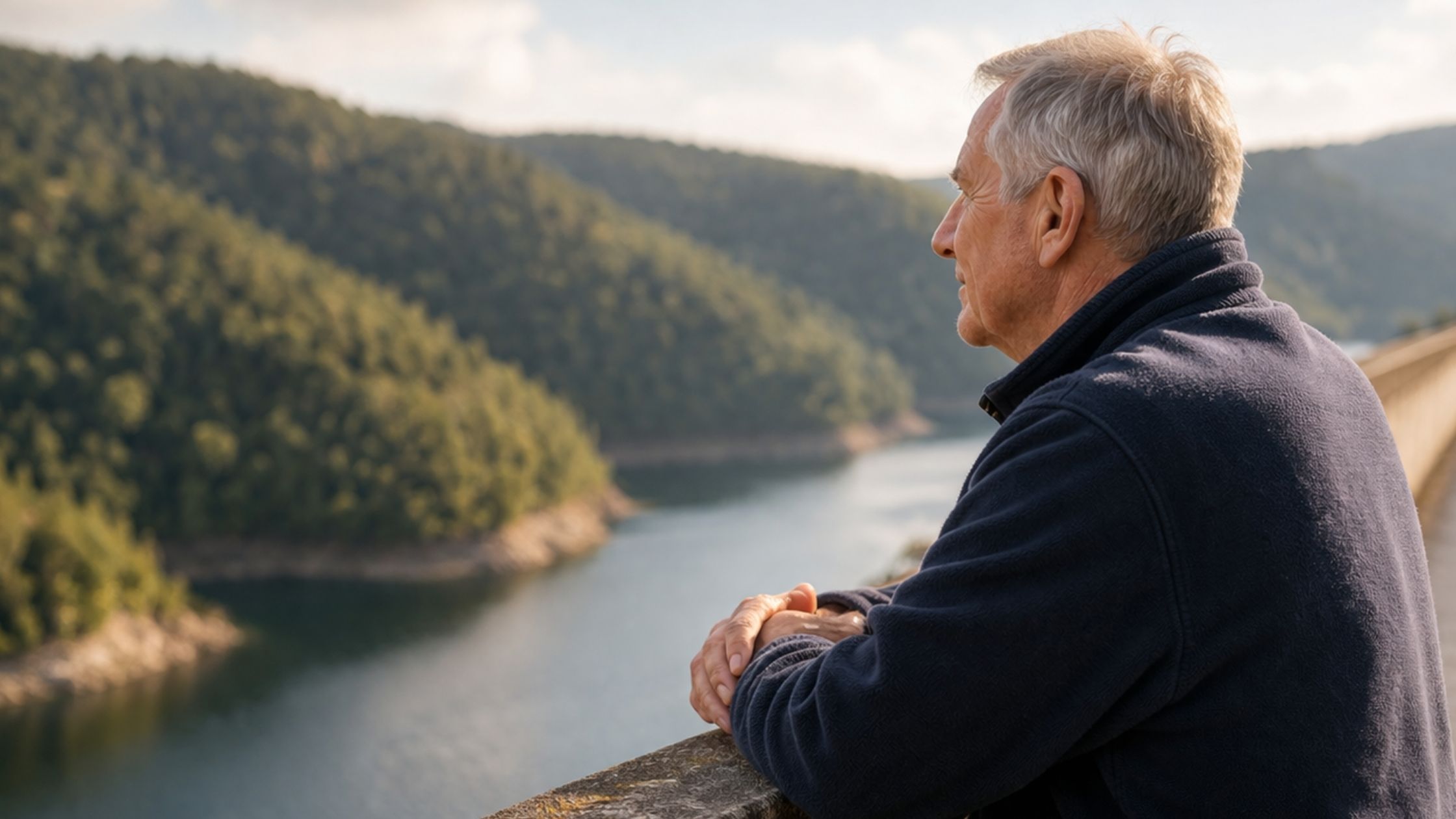
In fact, he walked across the elevated structure multiple times, stopping to look over the edge and take in the view.
What had once been a place associated with fear had become something entirely different.
It was simply a view.
Final Thoughts
Fear of heights is a deeply human experience. Our brains evolved to protect us from danger, and sometimes that protective system becomes overly sensitive.
The good news is that the brain is capable of learning new patterns.
Fear of heights treatment does not always mean forcing yourself to confront the fear repeatedly. Sometimes the shift comes from helping the unconscious mind recognise that the situation is safe.
When that internal update happens, the body often follows.
And places that once felt impossible can suddenly feel like somewhere worth standing for a moment — simply to enjoy the view.
Release Hypnosis Melbourne Hypnotherapy
Since 2015, Lawrence Akers has been working under the name Release Hypnosis offering Hypnotherapy and ACT based work to the people of Melbourne or an online service. Based on St Kilda Rd, Release Hypnosis is an easy and convenient location to get to and accessible by the ANZAC station train and tram stop. Release Hypnosis can help with a wide range of presenting issues, and I offer a free 30 minute no obligation discovery call for those who are unsure if hypnotherapy is the right way forward for them.
Book Your FREE 30 Minute Consultation With Release Hypnosis NOW!
You may also like to read:
Hypnotherapy: A Guide to Healing Through the Subconscious
The Neuroscience of Gratitude and Effects on the Brain: Unlocking Mental Resilience
What Is The Success Rate of Hypnosis?
Release Hypnosis Melbourne Hypnotherapy is accessible for people in: Abbotsford, Armadale, Albert Park, Balwyn, Bentleigh, Black Rock, Box Hill, Brighton, Brunswick, Bulleen, Bundoora, Camberwell, Canterbury, Carnegie, Caulfield, Chadstone, Cheltenham, Clayton, Coburg, Collingwood, Deer Park, Doncaster, Elsternwick, Eltham, Elwood, Epping, Essendon, Fairfield, Fitzroy, Footscray, Glen Iris, Glen Waverley, Glenhuntly, Greensborough, Hampton, Hawthorn, Heidelberg, Highet, Ivanhoe, Kew, Kooyong, Lalor, Laverton, Lower, Plenty, Macleod, Malvern, Middle Park, Moonee Ponds, Melbourne, Moorabbin, Mount Waverley, Murrumbeena, Northcote, Oakleigh, Ormond, Parkville, Pascoe Vale, Port Melbourne, Prahran, Preston, Richmond, Rosana, Sandringham, South Yarra, South Melbourne, Spotswood, St Albans, St Kilda, Surrey Hills, Templestowe, Thornbury, Toorak, Tullamarine, Williamstown, Yarraville, North Melbourne, Windsor, East Melbourne, Melbourne, Melbourne CBD, Melbourne 3004